
A workplace blood pressure screening event is most useful when it is designed as a repeatable health-awareness workflow—not simply a monitor placed on a table. Employers and event partners need an appropriate screening station, correctly sized equipment, trained support, privacy safeguards and a clear plan for unexpected readings.
Planning a workplace screening for employees or multiple locations?
Tell ZYBS your participant count, locations and preferred timeline so we can discuss equipment quantities and organizational requirements.
Request a Workplace Screening QuoteView ZYBS U80B Specifications
This practical guide is intended for HR leaders, benefits managers, occupational-health teams, wellness coordinators and organizations planning employee health events. A screening provides information and awareness; it does not diagnose hypertension. Participants with concerning readings or symptoms should be directed to appropriate professional medical evaluation.
Choose a calm, accessible area with seating, privacy and a one-way participant flow.
Standardize preparation, posture, cuff placement and repeat measurements.
Keep conversations and readings out of public view and limit unnecessary data collection.
Use a written escalation pathway and avoid diagnostic statements.
Prepare monitors, cuffs, power options, cleaning supplies, forms and signage.
Workplace screening planning table
| Planning area | Confirm before the event | Control during screening |
|---|---|---|
| Location & privacy | Quiet, accessible room; suitable chairs; privacy spacing or screens | Keep conversations, displays and results outside public view |
| Participant preparation | Preparation instructions and five-minute rest area | Back supported, feet flat, legs uncrossed, no talking |
| Equipment | Test monitors, cuff range, power supplies and cleaning materials | Use the correct cuff fit and follow device instructions |
| Measurement workflow | Train staff on one repeatable process | Measure consistently and repeat only according to protocol |
| Unexpected reading | Approve referral and emergency escalation steps | Do not diagnose; explain appropriate professional follow-up |
1. Define the purpose, scope and clinical boundaries
Start by deciding what the event is meant to accomplish. Common objectives include employee awareness, benefits engagement, a wider wellness fair or an introduction to home monitoring. Define the expected number of participants, event duration, number of locations, staffing model and whether the event will be walk-in or appointment-based.
Make the limits clear in participant-facing language. A workplace screening reading is a snapshot affected by posture, recent activity, stress, caffeine and other factors. It should not be presented as a diagnosis or a substitute for medical care. Your plan should state who can explain the result, when a repeat measurement is appropriate and how participants will be directed to professional care when needed.
2. Design a calm and privacy-conscious screening station
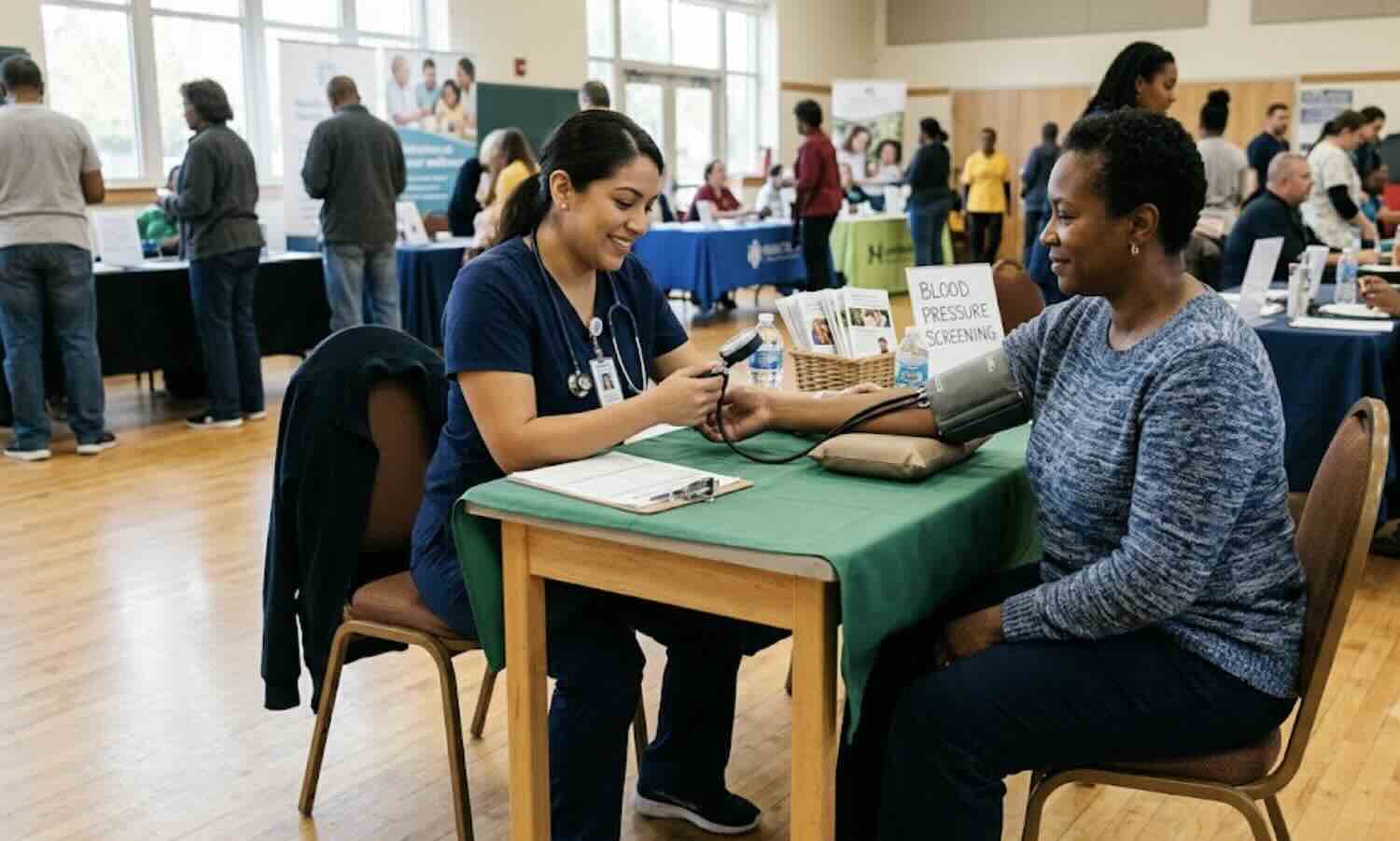
Select a quiet area away from queues, food service, loud conversations and heavy foot traffic. Each station needs a stable chair with back support, a table or arm support at approximately heart level, enough room for uncrossed legs and a screen or spacing arrangement that keeps results private.
A practical layout has three zones: check-in and education, the measurement station, and a private results or next-steps area. Use clear signs so participants know where to go without staff repeatedly calling names or readings across the room. If several stations operate together, maintain adequate separation and use a one-way flow to prevent congestion.
3. Use a consistent five-step measurement workflow
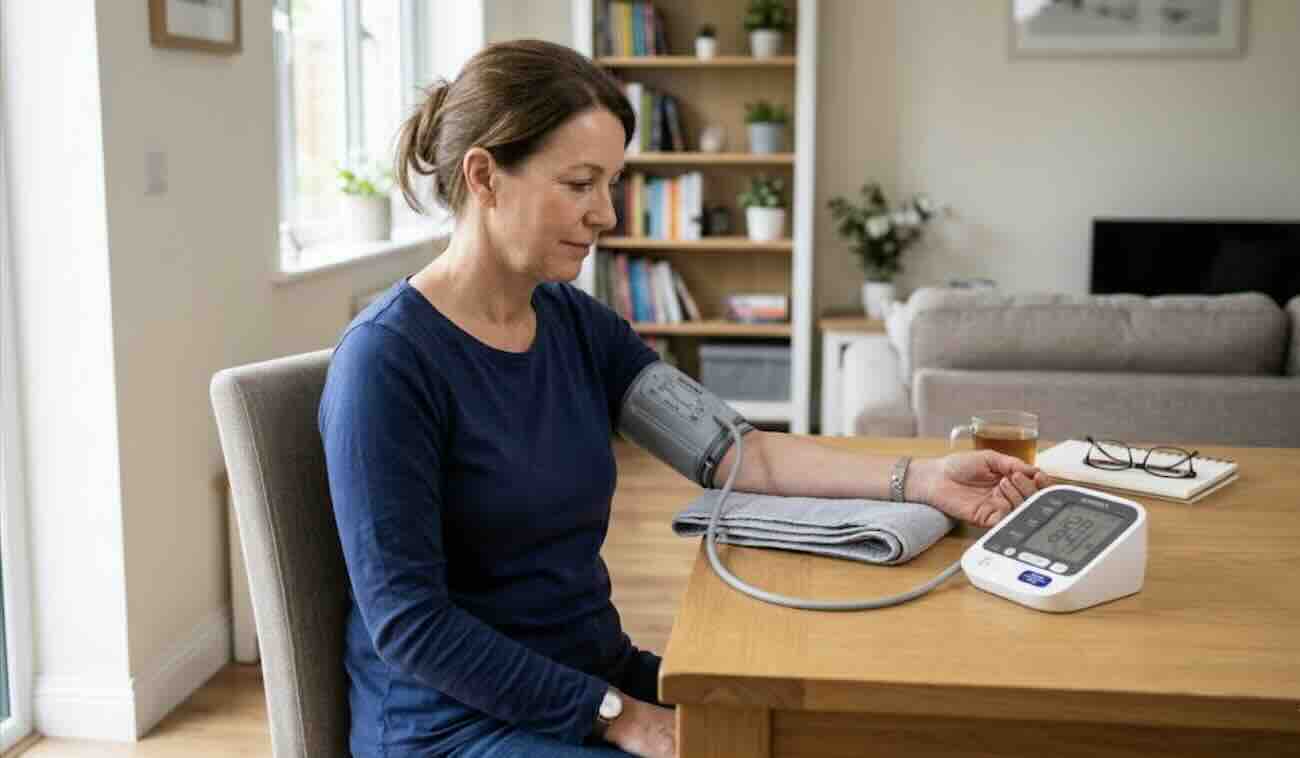
- Prepare: Ask the participant about recent exercise, smoking, alcohol or caffeine and explain that these can affect a reading. The cuff should be placed on bare skin, not over clothing.
- Rest: Have the participant sit quietly for at least five minutes with the back supported, feet flat on the floor and legs uncrossed.
- Position: Support the arm at chest or heart level and apply the correct cuff size according to the monitor instructions.
- Measure: Ask the participant not to talk or use a phone while the reading is taken. Record only the information authorized by the event plan.
- Explain next steps: If a reading is unexpected, follow the event protocol for rest, repeat measurement, symptom review and referral. Do not diagnose.
Consistency matters because small differences in posture, cuff placement or participant preparation can produce misleading comparisons. Teams may also share ZYBS guidance on how to measure blood pressure correctly at home and how to interpret blood pressure readings for follow-up education.
4. Choose equipment that fits the workflow
For multi-participant events, choose upper-arm monitors that are simple to operate, have a suitable cuff range and can be powered reliably throughout the day. Keep backup batteries or power supplies available, and check every unit before the event begins.
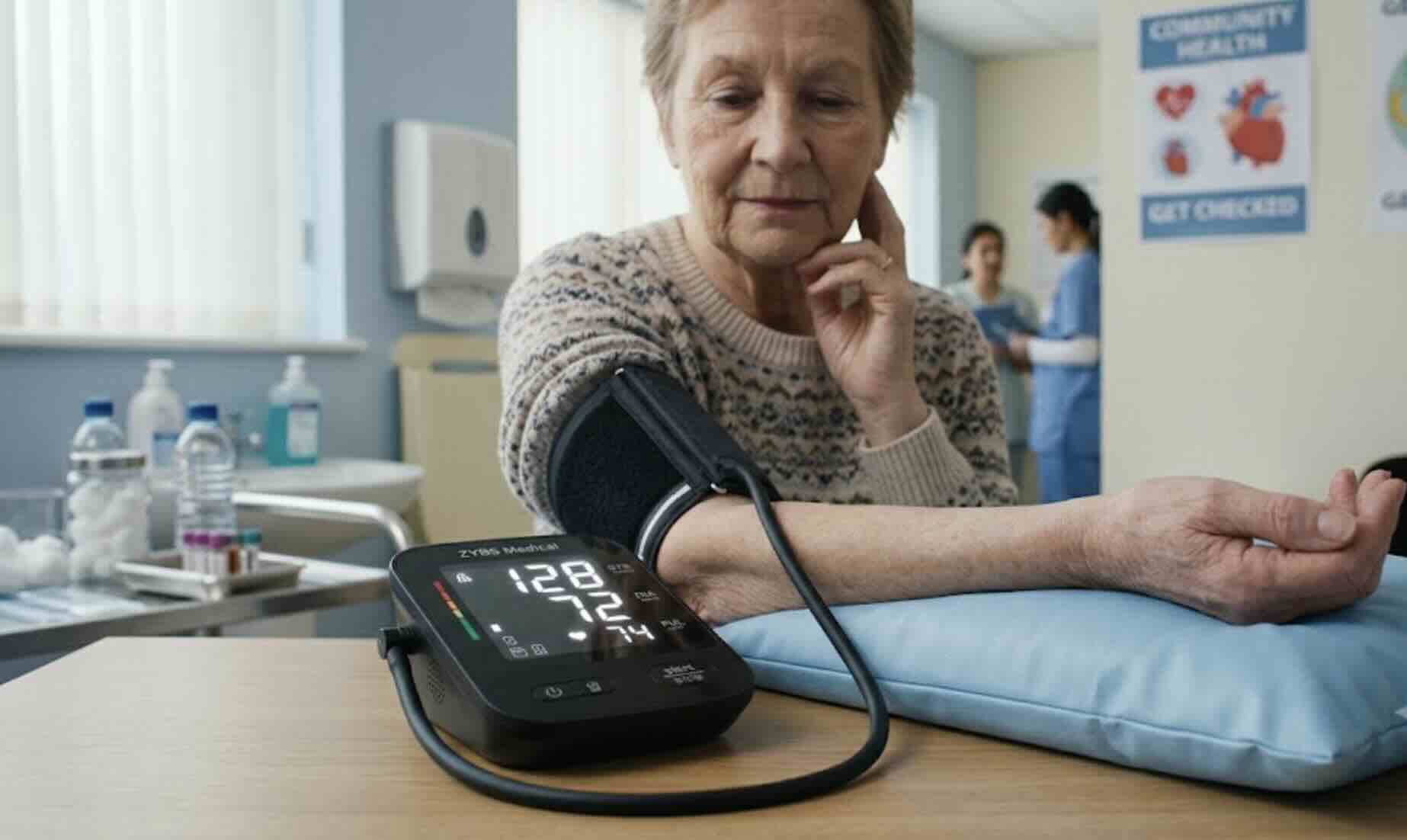
The ZYBS Medical Upper Arm Blood Pressure Monitor, Model U80B, is an FDA 510(k)-cleared upper-arm electronic blood pressure monitor associated with K160019. ZYBS Consulting LLC DBA ZYBS Medical Group is identified as the repackager/relabeler. The device includes a 22–42 cm cuff, English voice guidance, one-button operation, two-user memory of up to 199 readings per user and USB-C or AAA power options. It operates locally without mandatory Bluetooth or app onboarding. It is not appropriate to describe the device as “FDA approved.”
For an institutional event, also prepare disinfecting supplies compatible with the manufacturer’s instructions, spare cuffs where appropriate, paper or secure digital forms, pens, privacy screens, educational handouts, waste containers and visible escalation instructions. See the full ZYBS U80B product features before choosing quantities.
Need help estimating monitor quantities?
Share your estimated participant volume, event length and number of locations.
5. Protect privacy and minimize data collection
Decide in advance whether readings will be recorded, who will see them, how long records will be retained and whether the employer receives any information. In many wellness settings, the employer does not need individual results. Collecting only the minimum necessary information reduces privacy risk and helps participants feel comfortable taking part.
Do not announce names, readings or health concerns where coworkers can hear them. Position monitor displays away from waiting areas. If results are written or entered digitally, use an approved secure process and restrict access to authorized personnel. A monitor that works without mandatory app pairing can simplify a privacy-conscious event because participants are not required to create accounts or connect personal phones.
6. Create an escalation pathway before the event
Every team member should know what to do when a reading is unexpectedly high or low, when a participant reports symptoms, or when the device displays an error. The pathway should identify who repeats the measurement, who speaks with the participant, what educational language is approved and when urgent or emergency assistance may be appropriate.
Staff should avoid making a diagnosis, changing medication advice or promising that a single result confirms a condition. Instead, explain that the reading may warrant professional follow-up. Emergency symptoms require prompt action according to the event’s clinical and emergency plan.
Planning an event across one or more locations?
ZYBS can discuss equipment quantities, participant volume, desired dates, organizational requirements and healthcare-support options.
Workplace screening event checklist
- Confirm objectives, dates, locations and estimated participant count.
- Assign clinical leadership and an escalation pathway.
- Choose a quiet, accessible space with participant privacy.
- Test monitors, cuffs and power supplies before opening.
- Train staff on the same preparation and measurement process.
- Use approved wording that distinguishes screening from diagnosis.
- Minimize personal information and secure any authorized records.
- Provide participants with clear results and follow-up guidance.
- Test the inquiry or registration form on desktop and mobile.
Frequently asked questions
Can a workplace screening diagnose high blood pressure?
No. A screening reading supports awareness and may indicate that professional follow-up is appropriate, but it does not by itself diagnose hypertension.
How long should a participant rest before measurement?
At least five minutes, seated quietly with the back supported, feet flat, legs uncrossed and the arm supported around heart level.
Can the cuff be placed over clothing?
No. Place the cuff against bare skin and follow the device instructions for position and fit.
Should participants talk during the reading?
No. Talking, moving or using a phone can interfere with a consistent measurement.
What information should the employer receive?
That depends on the approved event and privacy plan. Individual readings generally should not be shared with an employer unless an appropriate, lawful and clearly communicated process authorizes it.
How many monitors are needed?
It depends on participant volume, event length, expected peak arrival rate and time needed for rest, measurement and results guidance. ZYBS can help organizations estimate quantities.
Does the ZYBS U80B require a mobile app?
No. The U80B operates locally without mandatory Bluetooth or app onboarding.
What should staff do with an unexpected reading?
Follow the event’s written protocol, which may include rest, repeat measurement, symptom review and referral to appropriate professional or emergency care. Staff should not diagnose.
Organizations that need broader support can review ZYBS healthcare capabilities, services and existing guidance for corporate wellness programs.