
How to Measure Your Blood Pressure Correctly at Home
Home blood pressure monitoring can give you and your healthcare professional useful information, but technique matters. A cuff placed over clothing, an unsupported arm, crossed legs, talking, or measuring immediately after activity can change a reading.
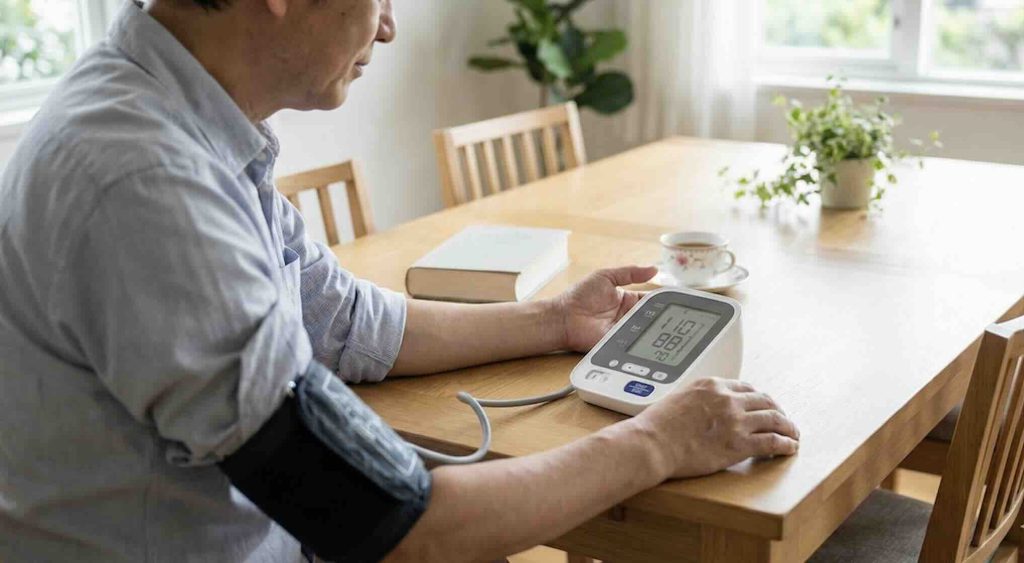
This step-by-step guide explains how to prepare, position the cuff, sit correctly, take and record readings, and respond appropriately to an unexpectedly high result. It is educational and does not replace medical advice, diagnosis, or treatment.
Quick measurement checklist
- Avoid smoking, caffeine, and exercise for at least 30 minutes beforehand.
- Empty your bladder and rest quietly for at least five minutes.
- Place the correctly sized cuff on bare upper-arm skin.
- Sit with your back supported, feet flat, and legs uncrossed.
- Support your arm so the cuff is approximately at heart level.
- Remain still and silent while the monitor is measuring.
- Follow your clinician’s instructions about timing and frequency.
Why correct home measurement matters
A single blood pressure reading is a snapshot. Consistent technique makes readings more useful for identifying patterns and discussing care with a qualified healthcare professional. Home monitoring may help document readings outside a clinic, support an existing care plan, and show whether follow-up may be needed. It should not be used to change medication without medical guidance.
Before you begin: choose an appropriate monitor and cuff
An automatic upper-arm cuff monitor is generally preferred for home use. The cuff must fit your arm: a cuff that is too small or too large can affect the result. Follow the monitor manufacturer’s positioning instructions and ask a healthcare professional to check your technique and compare your device with clinic equipment when appropriate.
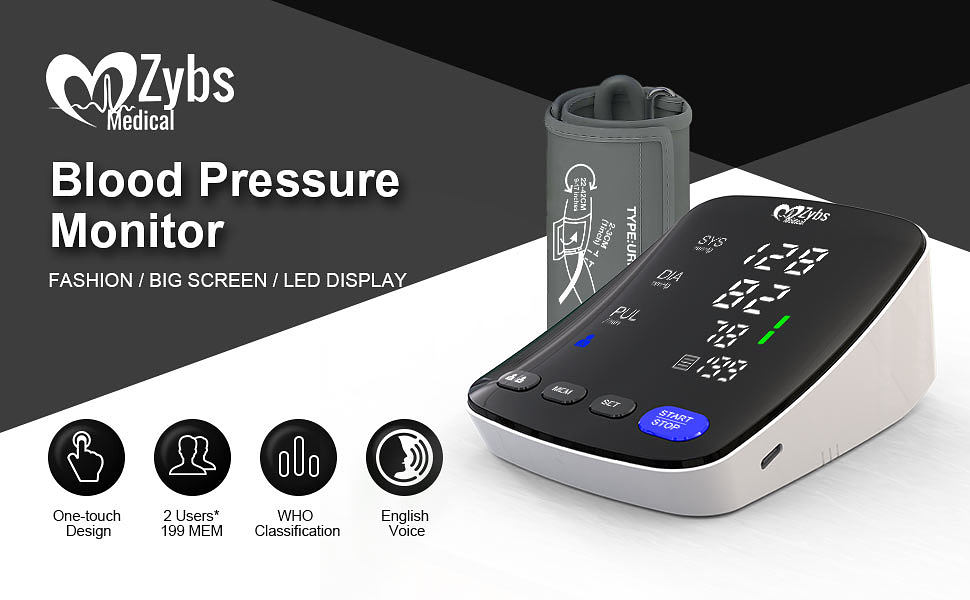
The ZYBS Medical U80B is an automatic upper-arm blood pressure monitor with a 22–42 cm cuff, English voice guidance, dual-user memory for 398 stored readings, and USB-C or AAA-battery power options. The device is associated with FDA 510(k) clearance K160019; ZYBS Consulting LLC DBA ZYBS Medical Group is listed as a repackager/relabeler. FDA clearance is not the same as independent clinical-validation listing.
Need an easy-to-use upper-arm monitor?
Review the verified U80B features and decide whether its cuff range, memory, display, voice guidance, and power options fit your needs.
Step-by-step: how to measure blood pressure correctly
1. Prepare for the reading
For at least 30 minutes before measuring, avoid smoking, caffeine, and exercise. Empty your bladder. Sit in a quiet place and rest for at least five minutes. Do not use this rest period to talk, work, or scroll through your phone. If your clinician has given you specific preparation instructions, follow those instructions.
2. Sit in the correct position
Use a chair with back support rather than sitting on a bed, sofa edge, or exam table. Keep both feet flat on the floor, with your legs uncrossed. Support the measuring arm on a table or firm surface so the middle of the cuff is approximately level with your heart. Relax your hand and shoulder.
3. Place the cuff on bare skin
Remove restrictive clothing from the upper arm; do not simply roll a tight sleeve above the cuff. Wrap the cuff around bare skin according to the device instructions. It should be secure but not painfully tight. Align the artery marker and tubing as instructed by the manufacturer. If the cuff does not fit within the stated arm-circumference range, use an appropriately sized cuff rather than forcing it.
4. Take the measurement quietly
Start the monitor and remain still. Do not talk, text, eat, or move your arm during inflation and measurement. Breathe normally. If the device reports an error, check the cuff position and tubing, rest again, and follow the manufacturer’s troubleshooting instructions.
5. Repeat and record
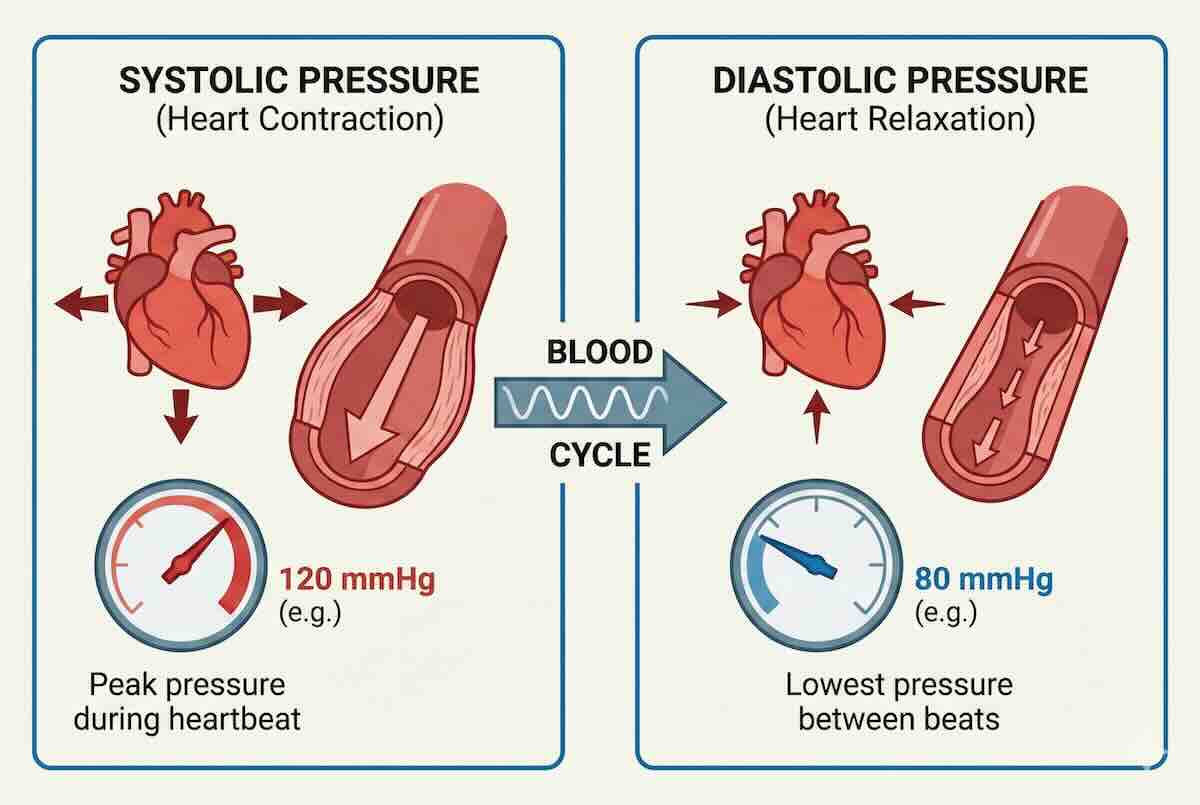
When following a home-monitoring plan, healthcare guidance commonly recommends taking two readings about one minute apart. Record both results unless your healthcare professional instructs you differently. Note the date, time, systolic pressure, diastolic pressure, pulse, and any relevant circumstance—such as symptoms or a missed medication—without changing treatment on your own.
| Stage | Correct action | Common error |
|---|---|---|
| Preparation | Rest quietly for at least five minutes | Measuring immediately after activity |
| Cuff | Correct size on bare upper arm | Cuff over clothing or wrong size |
| Posture | Back supported, feet flat, legs uncrossed | Unsupported back or crossed legs |
| Arm | Relaxed and supported near heart level | Arm hanging or held up by muscle effort |
| Reading | Stay still and silent | Talking, texting, or moving |
| Record | Log results and follow your care plan | Changing medication from one reading |
Common measurement mistakes to avoid
- Using a cuff that does not match your arm circumference.
- Putting the cuff over clothing.
- Measuring while your bladder is full.
- Taking a reading immediately after caffeine, smoking, or exercise.
- Sitting without back support or with crossed legs.
- Letting the measuring arm hang below heart level.
- Talking, moving, or looking at a phone during measurement.
- Taking repeated readings without allowing the recommended interval.
- Comparing readings taken under very different conditions.
- Changing medication based on a single home result.
See our related guide to common blood pressure monitoring mistakes and learn why upper-arm monitors are preferred for home use.
How often should you check your blood pressure?
There is no single schedule that is right for everyone. Frequency depends on your health history, current readings, medication plan, pregnancy status, symptoms, and your healthcare professional’s instructions. Some care plans use morning and evening readings for a defined period; others require less frequent monitoring. Ask your healthcare professional when to measure, how many readings to take, and when to report them.
For more detail, read How Often Should You Check Your Blood Pressure at Home?
What should you do if a reading is very high?
If your blood pressure is higher than 180/120 mm Hg: wait at least one minute and measure again.
- If it remains above 180/120 and you have symptoms such as chest pain, shortness of breath, weakness, numbness, vision changes, back pain, or difficulty speaking, call 911.
- If it remains above 180/120 without those symptoms, contact a healthcare professional promptly for guidance.
Do not delay emergency care because you are trying to obtain more readings.
Read our fuller guidance on what to do when a blood pressure reading is suddenly high.
Frequently asked questions
Should I measure over a shirt?
No. Place the cuff on bare upper-arm skin. Clothing can interfere with cuff fit and measurement.
Which arm should I use?
Ask your healthcare professional whether one arm is preferred. Once advised, use the same arm consistently unless instructed otherwise.
Can I talk while the monitor is running?
No. Remain still and silent until the measurement is complete.
Should I average my readings?
Record the readings according to your clinician’s plan. When two readings are requested, take them about one minute apart and keep both results; your healthcare professional can advise how to summarize them.
Does home monitoring replace medical care?
No. Home readings support—not replace—professional assessment. Never stop or change prescribed treatment based only on this article or one home reading.
Continue your home-monitoring journey
Compare the ZYBS Medical U80B’s verified features, cuff range, memory, voice guidance, and power options. Product pricing is shown on the current purchase page so this guide does not display an outdated price.
Medical disclaimer: This educational resource is not a diagnosis or individualized treatment plan. Consult a qualified healthcare professional about your readings, symptoms, monitoring schedule, and medications.