
How Often Should You Check Your Blood Pressure at Home?
One of the most common questions people ask after buying a home monitor is: How often should I actually use it?
The answer depends on your situation. Some people are simply trying to stay aware of their numbers. Others have already been told they have elevated blood pressure or hypertension. In general, regular home monitoring can be useful because high blood pressure often has no symptoms, and current guidance supports home measurement as part of better blood pressure awareness and management.
Why home monitoring matters
High blood pressure is often called a silent condition because many people do not feel any different even when their readings are high. The CDC says the only way to know whether you have high blood pressure is to measure it.
That is why home monitoring can be so useful. It helps you:
- know your numbers
- spot patterns earlier
- track readings between appointments
- have more useful conversations with a healthcare professional
If you are just starting out, begin with Why Regular Blood Pressure Monitoring Can Save Your Life and How to Measure Your Blood Pressure Correctly at Home.
So how often should you check?
There is no one single schedule that fits everyone, but current public health guidance gives a clear direction.
- Most adults should have their blood pressure checked by a healthcare provider at least once a year.
- If you already have high blood pressure, your provider may want you to check it more often.
- If you are using home monitoring to track readings, it is often most useful to measure at consistent times and look for patterns rather than checking randomly.
For many home users, a practical routine is:
- check in the morning
- check again in the evening
- take two readings, one to two minutes apart
- track the pattern for several days when monitoring closely
That type of routine is widely used in home blood pressure tracking and fits with the CDC’s self-monitoring tools that recommend multiple readings and consistent logging.
Who may need more regular home checks?
Home monitoring may be especially useful if you:
- have already been told your blood pressure is elevated or high
- are starting or adjusting treatment
- have a family history of hypertension
- are trying to improve lifestyle habits and want to track progress
- want more useful data between medical visits
If that sounds like you, this article also connects well with What Causes High Blood Pressure? Understanding the Hidden Risks.
How often is too often?
Checking too often can sometimes create stress without adding much value, especially if you are taking readings at random moments all day. The goal is not to obsess over one number. The goal is to build a calm, repeatable routine.
A better approach is:
- use proper technique
- keep timing consistent
- take more than one reading when needed
- log results
- review trends over time
That makes the data more useful and easier to interpret.
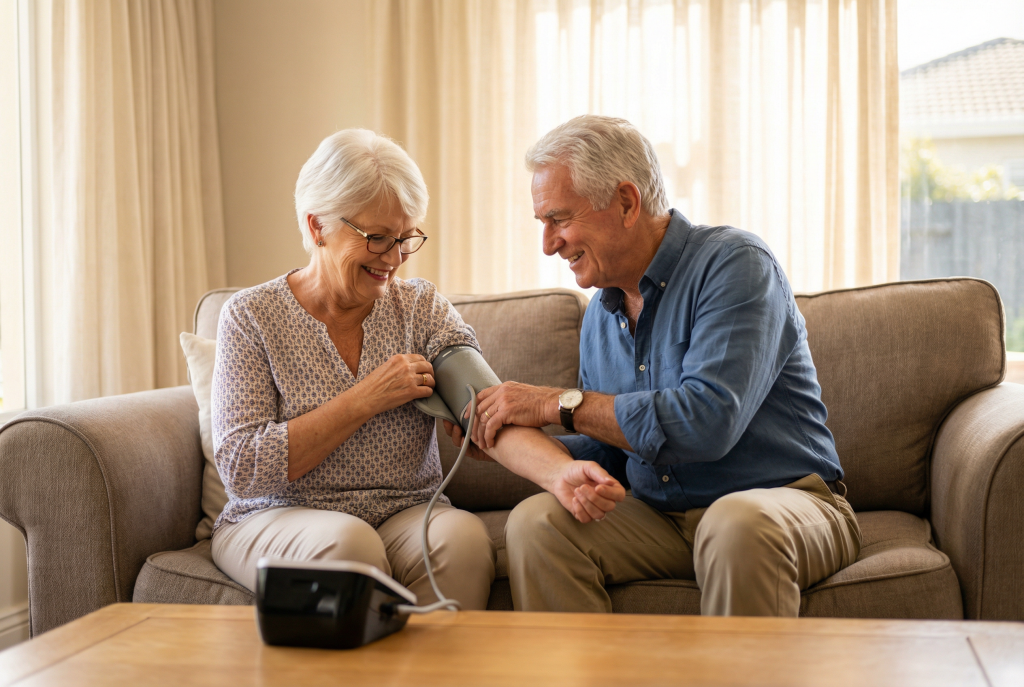
Best times of day to measure
Morning and evening are often the most practical times for home monitoring because they create a repeatable routine. Whatever schedule you use, consistency is the key.
Before measuring:
- sit quietly
- do not talk
- support your arm
- keep feet flat
- place the cuff on bare skin
Those basics come directly from CDC home measurement guidance.
What if your reading is high one day?
Do not panic over one number. Blood pressure changes during the day. What matters is the pattern over time. If a reading is unexpectedly high, sit quietly and recheck correctly.
If your reading is higher than 180/120, the American Heart Association advises waiting at least one minute and measuring again. If it remains that high, seek immediate medical guidance. If it is that high and you also have symptoms such as chest pain, shortness of breath, weakness, or trouble speaking, call emergency services.
Choosing a monitor that supports regular use
If you are going to monitor regularly, the device should be easy to use consistently. That usually means:
- upper-arm design
- easy-to-read display
- proper cuff fit
- memory storage
- simple operation
To compare options, see:
- How to Choose a Home Blood Pressure Monitor You Can Trust
- Top 7 Features to Look for in a Home Blood Pressure Monitor
- Why Upper Arm Blood Pressure Monitors Are Preferred for Home Use
If you are ready to buy, go straight to Buy V2.
Final thoughts
How often you should check your blood pressure at home depends on why you are monitoring, but the most useful routine is one that is calm, consistent, and repeatable. Home tracking is not about chasing perfect numbers every hour. It is about building awareness and noticing patterns earlier. High blood pressure often has no symptoms, which is why measuring it regularly matters.
Related articles
- Why Regular Blood Pressure Monitoring Can Save Your Life
- How to Measure Your Blood Pressure Correctly at Home
- What Causes High Blood Pressure? Understanding the Hidden Risks
- How to Choose a Home Blood Pressure Monitor You Can Trust
- Top 7 Features to Look for in a Home Blood Pressure Monitor
- Why Upper Arm Blood Pressure Monitors Are Preferred for Home Use
FAQs
How often should I check my blood pressure at home?
It depends on your situation, but many home users benefit from checking at consistent times, often morning and evening, and taking two readings one to two minutes apart when tracking closely.
Should I check my blood pressure every day?
Some people should, especially if they are tracking elevated readings or following a treatment plan. Others may not need daily checks. A healthcare provider can tailor the schedule to your needs.
What is the best time of day to check blood pressure?
Morning and evening are often practical times, but consistency matters most.
Should I take more than one reading?
Yes. Taking two readings, one to two minutes apart, can make home monitoring more useful.
Can checking too often increase anxiety?
It can for some people. That is why a calm, structured routine is usually better than checking randomly all day.

ZYBS U80B Upper Arm Blood Pressure Monitor
Voice-guided, large LED display, free shipping from Maryland. Designed for home use — simple, accurate, and FDA-cleared.
- English voice guidance after every reading
- Dual-user memory — 2 × 199 readings stored
- Large cuff fits 22–42 cm arm circumference
- USB-C power cable included · Free shipping from Maryland