
Family caregivers often help an older parent, spouse, veteran, or relative manage appointments, medications, meals, and daily routines. When a healthcare professional recommends home blood pressure monitoring, the caregiver may also become the person who helps select the device, position the cuff, record readings, and share useful information at the next appointment.
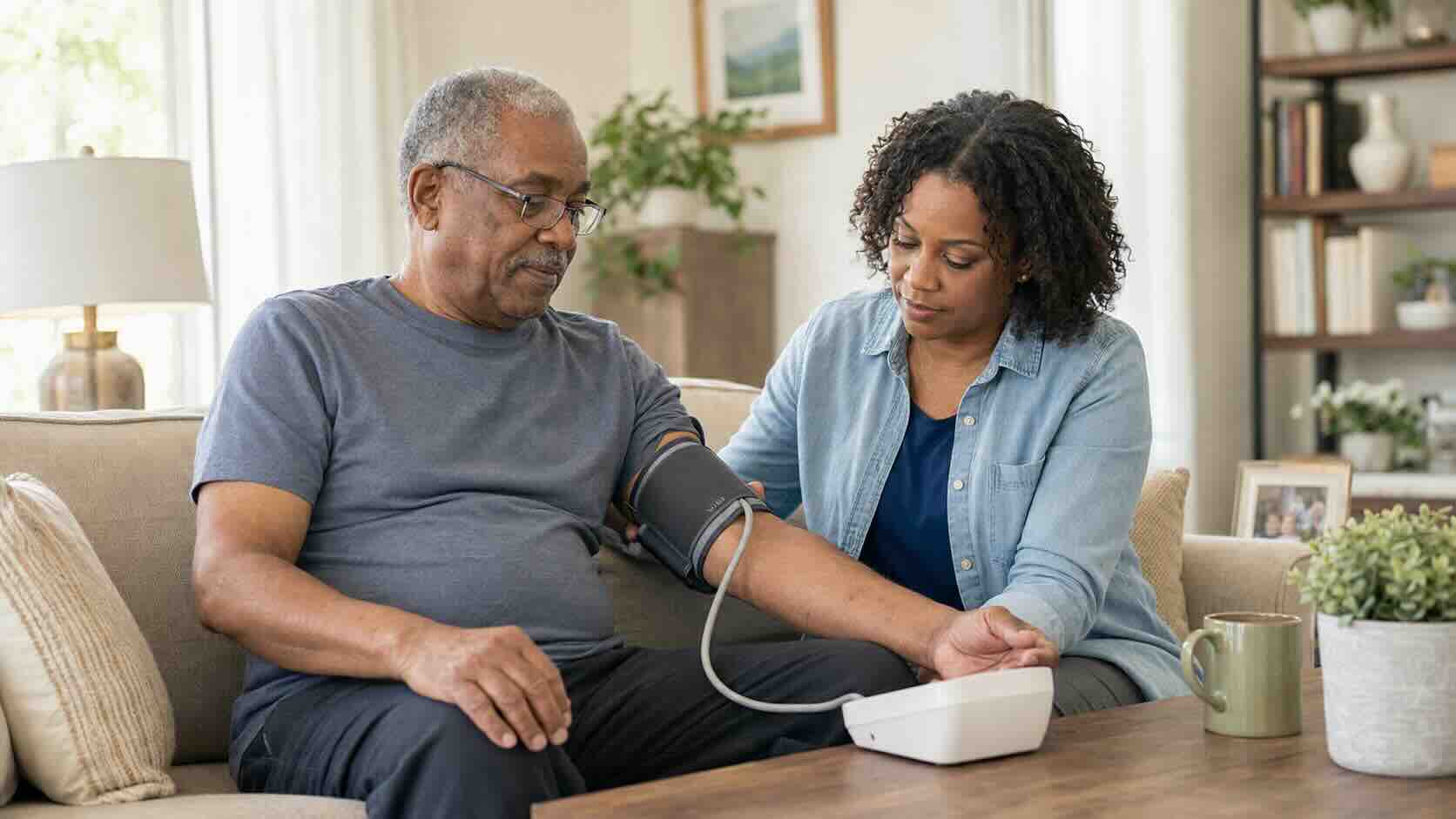
A blood pressure monitor for caregivers should be straightforward, readable, and suitable for consistent upper arm measurement. It should support the person being monitored without turning the caregiver into a diagnostician. The goal is to collect reliable information, follow the clinician’s plan, and know when to seek professional guidance.
Why caregivers may help with home blood pressure monitoring
Some adults can measure their blood pressure independently. Others may need help because of limited vision, reduced hand strength, memory challenges, mobility limitations, anxiety, or difficulty wrapping a cuff correctly. A caregiver can make the process calmer and more consistent.
The American Heart Association recommends home monitoring for people who have been diagnosed with high blood pressure and advises using an automatic upper arm cuff style monitor. Home readings can help a healthcare professional understand what is happening between appointments, but they do not replace medical visits or professional diagnosis.
- helping the person prepare and rest before measurement
- checking that the cuff is placed on a bare upper arm
- supporting the arm at heart level
- reducing talking and distractions during the reading
- recording results accurately
- bringing the record to a clinician
- following an existing care or escalation plan
What to look for in a blood pressure monitor for caregivers
Automatic upper arm measurement
An automatic upper arm monitor is generally easier to use consistently than a manual device that requires a stethoscope and technical training. The American Heart Association advises choosing an automatic upper arm cuff style monitor for home use. Wrist and finger monitors can be more sensitive to positioning.
A cuff that fits the user
Cuff fit matters. A cuff that is too small or too large may contribute to an inaccurate reading. Measure the person’s upper arm and compare it with the stated range before purchase. The ZYBS U80B includes an adjustable cuff designed for upper arm circumferences from 22 to 42 cm.
Simple operation and a clear display
A busy caregiver should not need to navigate complicated menus for a routine reading. One button operation, a large LED display, and English voice guidance can make the process easier for both the caregiver and the person being supported.
Memory for two people
Two user memory is useful when a caregiver and family member share a household or when a couple uses one device. The ZYBS monitor stores up to 199 readings for each of two users, a total of 398 readings. Each person should use the correct memory profile so the histories do not become mixed.
Flexible power options
USB C power is convenient for routine use, while AAA battery operation can help when the monitor needs to be moved to another room or used where an outlet is unavailable. Check the instructions before use and keep suitable batteries available if they are part of the household plan.
ZYBS U80B Upper Arm Blood Pressure Monitor
One button operation, English voice guidance, a large LED display, two user memory, and a 22 to 42 cm cuff range. The ZYBS U80B is FDA 510(k) cleared under K160019 and is intended for routine adult blood pressure and pulse measurement at home or in medical facilities.
Free shipping, 30 day returns, and a one year warranty.
How a caregiver can help take a more reliable reading
Good technique is as important as the device. The Centers for Disease Control and Prevention illustrates the basic position: sit with the back supported, keep both feet flat on the floor, place the cuff against bare skin, support the arm at chest or heart height, and avoid talking during the measurement.
- Prepare. Unless the healthcare professional gives different instructions, avoid exercise, smoking, and caffeinated drinks for at least 30 minutes beforehand. Empty the bladder.
- Rest. Let the person sit quietly for at least five minutes before beginning.
- Position. Support the back, keep feet flat and legs uncrossed, and support the arm so the cuff is at heart level.
- Apply the cuff. Wrap it around a bare upper arm according to the manufacturer’s instructions. Do not place it over clothing.
- Stay quiet. The caregiver and the person being measured should avoid talking or using a phone.
- Measure consistently. Follow the schedule provided by the healthcare professional. The American Heart Association’s 2025 home measurement instructions advise taking at least two readings one minute apart and recording the results.
- Record context. Note the date, time, readings, pulse, relevant symptoms, and any instruction from the care plan. Do not change medication based on the reading unless an authorized clinician has provided a specific plan.
For a more detailed technique explanation, read How to Measure Your Blood Pressure Correctly at Home and review 10 Common Blood Pressure Monitoring Mistakes.
Create a simple caregiver monitoring routine
Consistency makes the record more useful. Ask the treating professional when readings should be taken, how many are needed, which arm to use, and how the results should be shared. Keep the instructions near the monitor so another family member can follow the same process.
- store the monitor, cuff, log, pen, and instructions together
- use the same chair and supported surface where practical
- confirm the correct user profile before each reading
- write down results immediately or review the stored memory
- do not delete or overwrite readings needed for a clinical discussion
- bring the monitor to an appointment periodically if the clinician asks to compare it with office equipment
Privacy and dignity matter
Blood pressure readings are personal health information. Ask permission before measuring, recording, photographing, texting, or sharing them. Keep paper logs in a private place and use secure communication methods recommended by the care team. Avoid discussing results in front of visitors unless the person has agreed.
Voice guidance can improve accessibility, but it may announce readings aloud. If privacy is important, use the feature in a private room or adjust it according to the product instructions.
What caregivers should not do
- do not diagnose hypertension from one home reading
- do not change, skip, or double medication without professional direction
- do not rely on a monitor when serious symptoms require emergency assessment
- do not compare two people’s readings as though their care plans should be identical
- do not force measurement when the person refuses or when the cuff causes unusual pain
- do not present a home monitor as a replacement for clinical care
When a reading or symptom is concerning
Caregivers should follow the individualized instructions provided by the person’s healthcare professional. If a reading is unexpected, check that the person was resting, positioned correctly, and using the correct cuff. Repeat only as directed by the care plan or device instructions.
Call 911 for symptoms that may indicate a medical emergency, such as chest pain, severe shortness of breath, fainting, sudden weakness or numbness, new confusion, difficulty speaking, or a sudden severe headache. Do not delay emergency help while repeatedly checking the monitor. For more general education, see What to Do If Your Blood Pressure Reading Is Suddenly High.
Frequently asked questions
Can a caregiver take someone else’s blood pressure at home?
Yes, a caregiver can assist with an automatic home monitor when the person agrees and the caregiver follows the device instructions and the healthcare professional’s monitoring plan. The caregiver should not diagnose or alter treatment independently.
Can two family members use the same monitor?
They can share a suitable monitor, but each person should use the correct user profile and an appropriately fitting cuff. The ZYBS U80B provides two separate memory banks with 199 readings each.
Why is an upper arm monitor preferred?
Automatic upper arm cuff monitors are recommended by the American Heart Association for home monitoring. They are generally less position sensitive than wrist devices when used with the correct cuff size and technique. Read our upper arm versus wrist monitor comparison.
Does a home reading replace a medical appointment?
No. Home measurements provide additional information. Diagnosis, treatment decisions, and medication changes belong with a qualified healthcare professional.
A practical choice for family support
The best blood pressure monitor for a caregiver is one that fits the user, supports correct upper arm measurement, and is simple enough to use consistently. With one button operation, voice guidance, a large display, two user memory, and flexible power options, the ZYBS U80B is designed to make routine home monitoring more manageable.
Medical disclaimer: This article is for general education and does not provide diagnosis or treatment. Follow instructions from a licensed healthcare professional. Seek emergency assistance for severe or sudden symptoms.